

Robocop Otocinclus - Nannoptopoma sp. Robocop Fish Profile & Care Guide
Introduction
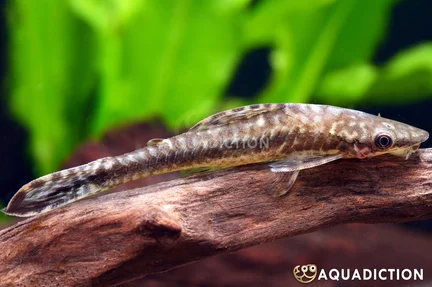
The Robocop Otocinclus Catfish (Nannoptopoma sp. Robocop) is an exceptional and visually striking species within the suckermouth catfish family. This diminutive relative of the common Otocinclus is distinguished by its distinct zebra pattern and a vivid red ring around its eye, making it a standout among other Nannoptopoma species. Celebrated for its algae-eating efficiency, this nano fish is a valuable addition to any aquarium.
Due to their somewhat timid nature, these Otocinclus require a tranquil and secure environment. They display social behaviour, preferring to stay in groups and often forage collectively. For optimal health, it is recommended to house them in groups of at least six, though larger assemblies are even more beneficial. An adequately sized aquarium is crucial to accommodate their social behaviour comfortably.
In terms of tank mates, compatibility with other small, peaceful fish and invertebrates is essential. Careful consideration of water conditions and the potential risk to very small dwarf shrimp fry, which may be inadvertently consumed, is important. Appropriate companions for these Otocinclus include species like Barbs, Danios, Dwarf Gouramis, Rasboras, Guppies, Tetras, Mollies, and Zebra Loaches. However, larger or more aggressive fish such as Cichlids and Oscars should be avoided to prevent harm to these smaller Catfish.
Creating an ideal habitat for the Robocop Otocinclus Catfish involves densely planting the tank with large-leafed aquatic plants, adding smooth rocks and bogwood, and using a layer of rounded gravel as a substrate. Introducing dried leaf litter can also be beneficial, as these fish graze on decomposing organic matter. Maintaining a relatively high water flow and pristine water conditions are crucial for the health and well-being of this species.
Availability
The Robocop Otocinclus isn't avilable any of our marketplace shops, want to be the first to offer it?.
Photos

Sexual Dimorphism
Identifying the sex of Robocop Otocinclus Catfish can be challenging; however, specific anatomical characteristics can facilitate the differentiation between males and females. Females generally possess a more robust and larger body structure compared to males. Conversely, males are characterized by a conical urogenital papilla located posterior to the anus, and they also feature a dorsal flap on the unbranched pectoral fin, a trait not present in females.
Quick Facts
| Scientific Name | Nannoptopoma sp. Robocop |
|---|---|
| Year Described | 2024 |
| Kingdom | Animalia |
| Classification | Actinopterygii |
| Order | Siluriformes |
| Family | Loricariidae |
| Genus | Nannoptopoma |
| Origins | Peru |
| Approx Max Size | 5 cm |
| Temperament | Peaceful |
| Aquarium Level | Bottom |
| Difficulty | Beginner - Intermediate |
| Shoaling | Yes |
| Best kept as | Groups 6+ |
| Diet & Feeding | Omnivore |
| Reproduction | Egg Depositor |
| Average Lifespan | Up to 5 Years |
Water Parameters
| Water Type | Freshwater |
|---|---|
| pH | 6.0 - 7.5 |
| GH | 4 - 10 |
| TDS | 36 - 179 |
| ℉ | 79 - 82 |
|---|---|
| ℃ | 26 - 28 |
Natural Habitat
The Robocop Otocinclus Catfish is native to the upper Rio Nanay in Peru, South America. This species primarily resides in streams that feature gentle to moderate water flows and substrates ranging from muddy to sandy compositions. In their natural habitat, these catfish display pronounced grazing behaviour, spending considerable time foraging on submerged driftwood and vegetation. Their specialized dietary preferences and substrate choices significantly define their ecological niche and feeding behaviours within their indigenous environment.
Breeding
To date, there are no documented instances of successful captive breeding of the Robocop Otocinclus Catfish. This absence of breeding success results in a significant gap in detailed knowledge about its reproductive behaviours and conditions necessary for breeding. It is speculated that the fry resulting from any breeding attempts would be exceptionally small, highlighting the need for a substantial availability of algae and other plant materials to support their growth and development. Continued research and detailed observations are essential to advance our understanding of this species' reproductive biology and breeding habits within controlled environments.
Diet & Feeding
The Robocop Otocinclus Catfish primarily engages in herbivorous feeding behaviours, with algae constituting a significant component of its diet in captivity. It is noteworthy that these Catfish generally do not damage most ornamental plants. In scenarios where the availability of algae is limited, it is advisable to supplement their diet with fresh vegetables such as romaine lettuce, cucumber, or zucchini. Furthermore, algae wafers or vegetable-based flake foods can be provided as appropriate dietary substitutes to fulfil nutritional requirements.
Other Otocinclus



Published: 26 Apr 2024
Last Updated: 26 Apr 2024