

Longnose Peppermint Otocinclus - Rhinotocinclus longirostris Fish Profile & Care Guide
Introduction
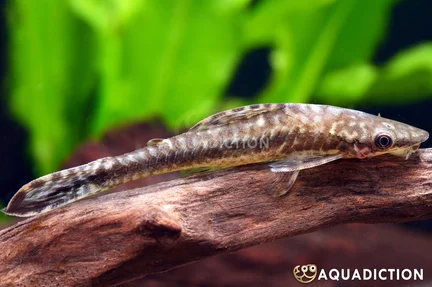
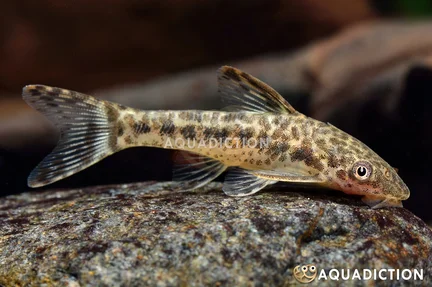
The Longnose Peppermint Oto (Rhinotocinclus longirostris) is a tiny suckermouth catfish from the central Amazon basin in Brazil. Recently moved from the genus Parotocinclus into Rhinotocinclus, it stays very small, has a noticeably elongated snout, and behaves much like the more familiar Otocinclus species, making it an appealing choice for careful aquarists looking for a more unusual nano catfish.
In terms of social behaviour, the Longnose Peppermint Oto is a strongly social fish that feels more secure when kept with its own kind. Wild relatives are often collected in groups, and commercial descriptions for this species specifically recommend keeping them in small shoals rather than as odd single specimens. In the aquarium, they will loosely group together on favoured pieces of hardscape or glass, especially when newly introduced or startled, then spread out to graze once they have settled. A good-sized group helps reduce stress, encourages natural behaviour and makes them more visible in a planted layout.
The Longnose Peppermint Oto is very peaceful and well-suited to calm communities and planted aquaria. Ideal tankmates are other small, non-aggressive species that share similar water requirements, such as small tetras, rasboras, pencilfish, dwarf Corydoras, other tiny loricariids and most community shrimp and snails. Boisterous or much larger fish, especially cichlids that defend territory or fast, greedy midwater fish, can easily outcompete them for food or cause them to hide constantly. Because they are gentle grazers that rely heavily on biofilm, it is important to avoid mixing them with very dominant bottom feeders that would continually disturb their feeding areas.
For long-term success, Longnose Peppermint Otos should be kept in a mature, stable aquarium with good oxygenation and gentle to moderate current, reflecting the well-oxygenated streams and small rivers they inhabit in the wild. A fine sand or smooth gravel substrate, abundant driftwood, rounded stones and dense planting will provide both grazing surfaces and shelter. They thrive in soft to moderately soft, slightly acidic to neutral water, and are sensitive to rapid changes in water chemistry, so regular small water changes are preferable to large, infrequent ones. As herbivorous to omnivorous grazers, they should not be expected to live on “tank algae” alone; a varied diet of high-quality algae wafers, specialised catfish tablets, and occasional blanched vegetables helps keep them in good condition, especially once the aquarium’s natural algae and biofilm begin to decline.
Availability
The Longnose Peppermint Otocinclus isn't avilable any of our marketplace shops, want to be the first to offer it?.
Photos

Sexual Dimorphism
Male Longnose Peppermint Otos have a few subtle features that set them apart from females. If you look closely from the side, males often show a tiny bump just behind the vent and a shallow fold of skin along the front edge of the pelvic fins that females do not have. Males also tend to have larger nostrils, which makes the gap between them look smaller and gives the snout a slightly raised look in front of the eyes. In many cases, males have longer pelvic fins too, which usually reach, or almost reach, the point where the anal fin begins.
Quick Facts
| Scientific Name | Rhinotocinclus longirostris |
|---|---|
| Year Described | 1988 |
| Kingdom | Animalia |
| Classification | Actinopterygii |
| Order | Siluriformes |
| Family | Loricariidae |
| Genus | Rhinotocinclus |
| Origins | Brazil |
| Approx Max Size | 2.5 cm |
| Temperament | Peaceful |
| Aquarium Level | Bottom - Middle |
| Difficulty | Beginner - Intermediate |
| Shoaling | Yes |
| Best kept as | Groups 6+ |
| Diet & Feeding | Omnivore |
| Reproduction | Egg Depositor |
| Average Lifespan | Up to 5 Years |
Water Parameters
| Water Type | Freshwater |
|---|---|
| pH | 6.0 - 7.5 |
| GH | 1 - 8 |
| KH | 0 - 4 |
| TDS | 80 - 200 |
| ℉ | 75 - 81 |
|---|---|
| ℃ | 24 - 27 |
Natural Habitat
The Longnose Peppermint Oto is native to the central Amazon Basin in Brazil. Its type locality is the Rio Preto da Eva in the state of Amazonas, and it is now known from tributaries of the middle Amazon, including parts of the Madeira and Negro river systems in Amazonas, Rondônia and Roraima. These are warm, tropical lowland waters where the fish clings to submerged roots, branches and stones while grazing on biofilm and fine algae.
In the wild, Longnose Peppermint Otos are found in clear and blackwater streams and small rivers. These habitats typically feature soft, often tea-coloured water stained by tannins from leaf litter, along with moderate to good current and high levels of dissolved oxygen. The river margins where they occur frequently have dense shoreline vegetation, submerged wood and leaf litter, which provide both shelter and a constant supply of surfaces coated in periphyton and microorganisms.
In terms of overall distribution, Longnose Peppermint Otos are currently considered endemic to Brazil and restricted to the central Amazon drainage, rather than a widespread pan-Amazonian species. It has been taxonomically separated from similar relatives in other Basins, such as Rhinotocinclus eppleyi from the Orinoco, based on detailed morphological work; therefore, records outside the central Amazon should be treated cautiously unless clearly documented.
Breeding
At the time of writing, there are no verified reports of Longnose Peppermint Otos being bred in home aquaria. Major specialist references list its reproduction in captivity as unknown and note that no breeding logs have been submitted for the species, so any information on spawning behaviour is based on its close relatives rather than direct observation. Within the wider loricariid family, members of the Hypoptopomatinae (the group that includes Rhinotocinclus, Otocinclus and Parotocinclus) are generally open substrate spawners that lay adhesive eggs on hard surfaces and do not provide prolonged parental care.
By looking at well-documented relatives such as Parotocinclus and Otocinclus species, we can make a cautious, informed assumption about how R. longirostris is likely to reproduce. These small loricariids typically scatter small clutches of sticky eggs on plant leaves, décor or aquarium glass, often after a period of heavy feeding and a change in water conditions that mimics the onset of the rainy season. Adults usually show little or no egg guarding and may eat the eggs if left in the spawning area, so successful breeders of related species often remove the parents once spawning is observed and rear the eggs and fry separately.
For aquarists hoping to be among the first to record a confirmed spawning of Longnose Peppermint Otos, a sensible approach is to borrow techniques used for its better-known cousins. A dedicated, mature, well-oxygenated tank with plenty of smooth leaves, driftwood, and exposed glass surfaces provides potential spawning sites, while keeping a well-conditioned group with a slight female bias mirrors the social setup used for breeding Otocinclus and Parotocinclus. Regular small water changes and abundant high-quality food can help simulate natural seasonal cues. Any eggs discovered should be carefully photographed and documented, both to aid identification and to provide reliable information to the hobby, since the breeding behaviour of this species has yet to be formally recorded.
Diet & Feeding
The Longnose Peppermint Oto is a specialised grazer that spends most of its time rasping at hard surfaces to remove soft algae, biofilm, and the tiny microorganisms trapped within. In nature, Longnose Peppermint Otos are found clinging to wood, stones and plant leaves in well-oxygenated streams, where they crop fine growths of periphyton rather than chewing on large, tough algae. In the aquarium, they should never be expected to survive on “whatever algae appears” in the tank.
A mature setup with plenty of smooth surfaces and plants will provide some natural grazing, but this must be backed up with a varied diet. Offer high-quality algae wafers, sinking tablets formulated for herbivorous catfish, and supplementary foods such as blanched spinach, courgette, green beans or cucumber slices. These should be removed before they break down. Because they are small and quite shy, it is important to ensure that more boisterous bottom dwellers or fast midwater fish do not consume all prepared foods before the Rhinotocinclus can feed. Regular, gentle feeding, with the lights dimmed or just after lights-out, often helps them eat more relaxedly and maintain good body condition.
Other Otocinclus



Published: 05 Dec 2025
Last Updated: 05 Dec 2025