

Mimicry Otocinclus - Otocinclus mimulus Fish Profile & Care Guide
Introduction
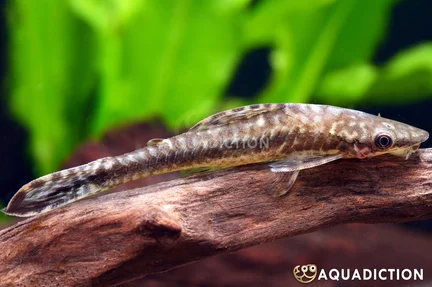
The Mimicry Otocinclus (Otocinclus mimulus) is a small armoured catfish in the family Loricariidae, described by Axenrot & Kullander in 2003 and reaching around 4–5 cm in length. Like its congeners, it is a suckermouth “oto” adapted to grazing on biofilm and algae, with a streamlined body and a ventral suckermouth. The species is best known for its remarkable Batesian mimicry of the Corydoras catfish Hoplisoma diphyes: it closely copies the cory’s spotted pattern, gaining some protection from predators that avoid the more heavily armoured model species. Although still an uncommon import, O. mimulus shares the peaceful nature and useful algae-grazing behaviour that have made other Otocinclus highly valued in planted aquaria.
Like other Otocinclus, the Mimicry Otocinclus is strongly social and should be regarded as a shoaling species rather than a solitary algae-eater. Field observations and aquarium experience with Otocinclus generally show them living in groups, often clustered on the same leaf, root, or pane of glass while they graze. Reports on Mimicry Otocinclus indicate that they are not suited to being kept singly and do best in groups of at least three to five individuals, with larger groups preferable where space allows. In a proper shoal, they are more confident, spend more time visible during the day, and maintain healthier feeding behaviour, which is critical for a species so reliant on constant grazing.
As a tiny, peaceful loricariid, Mimicry Otocinclus is ideal for calm community setups but can easily be outcompeted or stressed by boisterous fish. General Otocinclus care guidance recommends combining them with small, non-aggressive species such as tetras, rasboras, peaceful dwarf cichlids, and small Corydoras, avoiding large cichlids, predatory fish, and fin-nippers that may harass them or monopolise food. Given its natural mimetic association with Corydoras diphyes, keeping Mimicry Otocinclus alongside small Corydoras species is particularly appropriate and makes for interesting behaviour to observe. Shrimp and other invertebrates are generally safe, since O. mimulus focuses on biofilm and plant surfaces rather than active predation.
Care requirements for Mimicry Otocinclus largely mirror those for the genus as a whole: a mature, well-oxygenated aquarium with stable water and abundant biofilm is far more important than sheer tank size. Soft to moderately hard water is tolerated, but extremes in either hardness or pH should be avoided, and sudden changes are particularly risky. A planted tank with plenty of broad leaves, driftwood, and rounded stones provides an extensive grazing surface and vital cover; these fish are sensitive to poor water quality, so light stocking, efficient filtration with gentle flow, and regular partial water changes are essential. Because they rely heavily on natural films, Mimicry Otocinclus should only be introduced to an established aquarium, and their diet should be supplemented with high-quality vegetable-based wafers and blanched greens to prevent starvation once algae levels drop.
Availability
The Mimicry Otocinclus isn't avilable any of our marketplace shops, want to be the first to offer it?.
Photos


Sexual Dimorphism
Sexual dimorphism in Mimicry Otocinclus is subtle but follows the general pattern seen across the genus. Females are noticeably larger and broader in the body than males, especially when viewed from above, a difference that becomes most obvious when females are carrying eggs. Males, by contrast, usually remain slimmer and more streamlined. Studies on closely related Otocinclus species show that males possess small specialised structures, such as a skin flap on the unbranched pelvic-fin ray and minute contact organs near the caudal peduncle, features linked to courtship and spawning, whereas females lack these structures. Although these fine anatomical traits have not been described in detail for O. mimulus, it is reasonable to assume a similar pattern, so, for everyday aquarium practice, the most reliable way to sex this species is to compare overall body shape and width in well-conditioned adult fish.
Quick Facts
| Scientific Name | Otocinclus mimulus |
|---|---|
| Year Described | 2003 |
| Kingdom | Animalia |
| Classification | Actinopterygii |
| Order | Siluriformes |
| Family | Loricariidae |
| Genus | Otocinclus |
| Origins | Paraguay |
| Approx Max Size | 4.5 cm |
| Temperament | Peaceful |
| Aquarium Level | Bottom - Middle |
| Difficulty | Beginner - Intermediate |
| Shoaling | NA |
| Best kept as | Groups 5+ |
| Diet & Feeding | Omnivore |
| Reproduction | Egg Depositor |
| Average Lifespan | Up to 5 Years |
Water Parameters
| Water Type | Freshwater |
|---|---|
| pH | 6.0 - 7.5 |
| GH | 2 - 12 |
| TDS | 80 - 250 |
| ℉ | 72 - 79 |
|---|---|
| ℃ | 22 - 26 |
Natural Habitat
The Mimicry Otocinclus is restricted to a relatively small part of southern South America and is currently known only from tributaries of the Río Monday, a right-bank tributary of the Río Paraná in Paraguay. These fish can be found in a modest-sized stream in the Caaguazú Department, with dark, clear to slightly turbid water that flows through a mosaic of low forest and pasture. Habitat notes from the original description and major databases indicate that Otocinclus mimulus typically occupies shallow marginal zones with sandy or fine substrates, patches of submerged or overhanging bank vegetation, and relatively limited fish diversity compared with nearby main channels. Within these small tributaries, it is found in close association with its model species, Hoplisoma diphyes, although the two tend to use slightly different microhabitats: O. mimulus spends more time among vegetation along the banks, while the corydoras favours more open mid-stream areas. This tight geographic focus and its reliance on a specific tributary system mean that, at present, O. mimulus should be regarded as a Paraguay endemic tied to the Monday River sub-Basin within the larger Paraná Drainage.
Breeding
Breeding behaviour in Mimicry Otocinclus has not been documented in formal scientific detail, and major reference works still list the species as having “unreported” breeding in captivity, so any guidance relies on a combination of limited hobby observations and well-established knowledge of the genus Otocinclus. Like other otos, O. mimulus is an adhesive egg-layer that does not guard its eggs: females deposit small clutches on leaves, decor or aquarium glass while being pursued by males, and pairs adopt a Corydoras-like “T-position” during spawning, as described in specialist catfish literature and broader Otocinclus breeding reports. Eggs typically hatch within a couple of days under suitable conditions, with the tiny fry remaining attached to surfaces at first, then grazing biofilm and very fine foods once free-swimming. Because successful spawns are still relatively uncommon and fry are delicate, any breeding attempts should be treated as experimental and carefully documented rather than assumed routine.
Diet & Feeding
Like other Otos, Mimicry Otocinclus is a specialist grazer that feeds primarily on biofilm scraped from leaves, wood and other submerged surfaces using its underslung sucker mouth and rows of small teeth. In the aquarium, this means Mimicry Otocinclus cannot be treated as a simple “cleanup crew” fish that will thrive on leftovers alone. It should be given a mature tank with abundant natural biofilm to graze, and its diet needs to be supplemented regularly with high-quality algae wafers, spirulina-based tablets, and blanched vegetables such as courgette, cucumber or spinach, which closely match the soft plant and film-based foods they rasp in the wild. Providing constant grazing surfaces and avoiding sudden reductions in available algae are key to long-term success.
Other Otocinclus




Published: 11 Dec 2025
Last Updated: 11 Dec 2025