


Bar Cheek Goby - Rhinogobius giurinus Fish Profile & Care Guide
Introduction
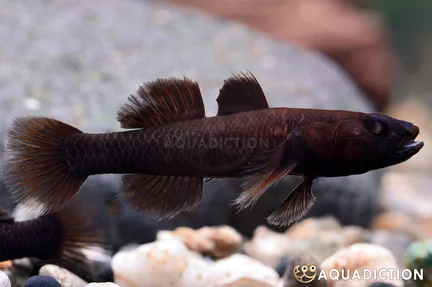
The Bar Cheek Goby (Rhinogobius giurinus) is esteemed among freshwater aquarium enthusiasts for its compact size and distinct physical attributes, notably its slender body and characteristic bar markings on the cheeks, which are essential for species identification. In terms of aquarium dynamics, it is important to consider the territorial nature of male Bar Cheek Gobies. To ensure a harmonious environment, it is advisable to maintain a higher ratio of females to males unless the aquarium is spacious and replete with numerous hiding spots, in which case a group setting may be sustainable.
Selecting compatible species is crucial when integrating Bar Cheek Gobies into a community tank. Medium-sized, pelagic cyprinids from genera such as Devario or Barilius are typically favourable companions. Conversely, slow-moving fish may be vulnerable to aggression, while smaller species could be at risk of predation. Co-habitation with other benthic species is generally not recommended, and small invertebrates like Shrimp are likely to be preyed upon and should be avoided.
Creating an environment that closely replicates the natural habitat of the Bar Cheek Goby is essential for their well-being. This includes maintaining clean, well-oxygenated water with a mild current. The substrate should ideally be a natural blend of sand, gravel, and small pebbles, complemented by strategically placed rocks and boulders to facilitate the natural nesting behaviour observed in these fish. Providing ample hiding places using rocks and driftwood is vital. To ensure the health and vitality of the Bar Cheek Gobies, regular monitoring of water quality and consistent water changes are imperative.
Availability
The Bar Cheek Goby isn't avilable any of our marketplace shops, want to be the first to offer it?.
Photos

Sexual Dimorphism
Identifying the gender of Bar Cheek Gobies can be done with relative ease due to the distinct sexual dimorphism exhibited by the species. Males are characterized by more vibrant colouration, often accompanied by conspicuous markings on their cheeks and the branchiostegal membrane, which is the flexible skin located beneath the gill covers. Additionally, males typically display dorsal markings not present in females and possess more pointed fins. Females, on the other hand, exhibit a fuller body shape when ready to spawn, and the presence of golden egg patches can be observed through the skin on their flanks.
Quick Facts
| Scientific Name | Rhinogobius giurinus |
|---|---|
| Year Described | 1897 |
| Kingdom | Animalia |
| Classification | Actinopterygii |
| Order | Gobiiformes |
| Family | Oxudercidae |
| Genus | Rhinogobius |
| Origins | China North Korea South Korea Taiwan Japan |
| Approx Max Size | 9 cm |
| Temperament | Peaceful |
| Aquarium Level | Bottom - Middle |
| Difficulty | Intermediate |
| Shoaling | No |
| Best kept as | 1 Male + Several Females |
| Diet & Feeding | Omnivore |
| Reproduction | Egg Depositor |
| Average Lifespan | Up to 5 Years |
Water Parameters
| Water Type | Freshwater/Brackish |
|---|---|
| pH | 6.5 - 8.5 |
| GH | 5 - 10 |
| KH | 2 - 6 |
| TDS | 36 - 357 |
| ℉ | 64 - 75 |
|---|---|
| ℃ | 18 - 24 |
Natural Habitat
The Bar Cheek Goby, a species indigenous to Eastern Asia, thrives in a diverse array of aquatic environments, encompassing marine, brackish, and freshwater ecosystems found within rivers and estuaries. This fish is predominantly found across an extensive geographical range that includes notable river systems such as the Yellow River, Yangtze River, Qiantang River, Lingjiang, and Pearl River, as well as regions like Fujian, Guangdong, and Hainan.
Its habitat further extends to encompass areas in Taiwan, Hong Kong, the entirety of the Korean Peninsula, and specific locations in Japan, including the Tone River through to Iriomote in Ibaraki Prefecture, Kawahara Lake in Nagasaki Prefecture, as well as the Bonin Islands and the Ryukyu Islands. Additionally, the Bar Cheek Goby's range extends to the northern regions of Vietnam. Typically, these Gobies are found in rapidly flowing streams, where they inhabit riverbeds composed of sand or stones, often in waters that maintain a relatively cool temperature.
Breeding
Breeding Bar Cheek Gobies requires understanding their specific reproductive behaviours and environmental needs. In their natural habitat, these Gobies breed during warmer months, with males exhibiting increased territoriality to attract females and secure breeding sites. To replicate these conditions in captivity, the aquarium should have a controlled temperature that mimics seasonal warmth. Males prepare a nesting area, usually under rocks or within crevices, where females are enticed to lay their eggs.
The egg size exhibits notable variation in diameter across different populations, with some being considerably smaller than others. A single female is capable of depositing several thousand eggs. Following the spawning process, the female is typically excluded from the site, and the male takes on the sole responsibility for brood care and protection.
The incubation period for the eggs generally spans 3 to 4 days. Upon hatching, the larvae initially exhibit a drifting behaviour in the water column for approximately 24 hours. Subsequently, they begin to exhibit more directed movements, indicating the onset of their developmental progression towards juvenile stages. The larvae's initial dietary requirements necessitate extremely fine food particles, as even freshwater rotifers may be too large for their consumption at this early stage.
Diet & Feeding
In the wild, the Bar Cheek Goby primarily sustains itself on a diet comprising small invertebrates, including insect larvae, tiny crustaceans, and various microorganisms that thrive in its natural riverine habitats. In captivity, however, the dietary requirements of these fish necessitate careful consideration to mimic their natural feeding patterns.
A balanced diet typically includes a variety of commercially available foods, such as high-quality flake foods, frozen or live brine shrimp, daphnia, and bloodworms. These food items are chosen to ensure a nutritional profile that closely resembles their natural diet, thereby promoting optimal health and vitality in the species.
Other Gobies


Published: 13 Dec 2023
Last Updated: 13 Dec 2023