


Amur Goby - Rhinogobius brunneus Fish Profile & Care Guide
Introduction
Amur Gobies (Rhinogobius brunneus), while sometimes less striking in appearance, offer engaging behaviour and are well-suited for smaller aquarium setups due to their manageable size. However, their care requires awareness of the males' territorial tendencies. To prevent conflicts, it's advisable to have a group with more females than males, especially in smaller tanks. In larger aquariums with ample hiding spots, a more balanced group can be maintained. These gobies are ideally kept in a tank focused on their specific needs, but they can peacefully coexist with midwater or surface-dwelling species like Rainbowfish and small to medium-sized Barbs.
Setting up an ideal environment for Amur Gobies involves simulating a flowing stream habitat. This includes a sand or fine gravel substrate, smooth rocks, and additional features like driftwood and plant pots to create hiding spots and shaded areas. While traditional aquatic plants might find it challenging to thrive in these conditions, more robust varieties can be attached to décor elements.
Amur Gobies demand clean water with minimal organic waste. Routine maintenance should include weekly water changes of about 30 to 50% to maintain optimal conditions. While replicating strong currents isn't necessary, it's beneficial to ensure a high level of dissolved oxygen and gentle water movement. This can be achieved with powerheads, power filters, or airstones, depending on the specific needs of the aquarium setup.
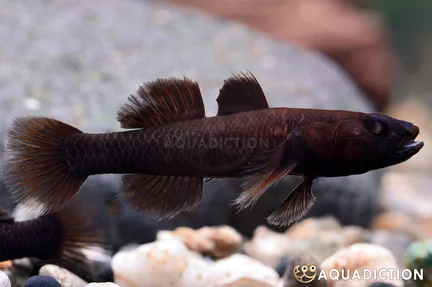
The Amur Goby showcases a stunning and diverse colouration that varies between males and females. In males, the base of the body scale pockets is adorned with a bright orange spot, which is less prominent in females. Female Amur Gobies are distinguished by a row of discontinuous brownish-black spots or bars along their sides, and their upper lateral region features 3 to 4 rows of black spots. Additionally, their caudal fin base is marked by two separate, vertical black bars.
In contrast, male Amur Gobies have a second dorsal fin decorated with four rows of reddish-brown bars or spots, and their caudal fin is embellished with 8 to 10 wavy vertical stripes in shades of orange to brown. Both genders have a distinctive, oblique, deep brown stripe at the base of the pectoral fin, complemented by a shorter, lighter parallel stripe or wavy mark. The cheeks of these Gobies are speckled with 16 to 25 small orange-red spots, with the males exhibiting a more vivid brightness. This rich colouration not only adds to their visual appeal but also highlights the distinct differences between the sexes.
Availability
The Amur Goby isn't avilable any of our marketplace shops, want to be the first to offer it?.
Photos

Sexual Dimorphism
Identifying the sex of Amur Gobies is generally an uncomplicated process. Male Amur Gobies can be easily recognized by their distinctive physical traits. They possess larger mouths and longer snouts than females. Additionally, males are notable for their more colourful fins and longer dorsal fins, which are distinguishing features that differentiate them from female Amur Gobies.
Quick Facts
| Scientific Name | Rhinogobius brunneus |
|---|---|
| Year Described | 1845 |
| Kingdom | Animalia |
| Classification | Actinopterygii |
| Order | Gobiiformes |
| Family | Oxudercidae |
| Genus | Rhinogobius |
| Origins | Japan Taiwan North Korea South Korea China Vietnam Philippines |
| Approx Max Size | 10 cm |
| Temperament | Peaceful |
| Aquarium Level | Bottom - Middle |
| Difficulty | Intermediate |
| Shoaling | No |
| Best kept as | 1 Male + Several Females |
| Diet & Feeding | Omnivore |
| Reproduction | Egg Depositor |
| Average Lifespan | Up to 5 Years |
Water Parameters
| Water Type | Freshwater/Brackish |
|---|---|
| pH | 7.0 - 8.0 |
| GH | 5 - 20 |
| TDS | 36 - 268 |
| ℉ | 61 - 68 |
|---|---|
| ℃ | 16 - 20 |
Natural Habitat
Amur Gobies are widespread in northeastern Asia, inhabiting various environments, from freshwaters to estuaries and coastal waters. Their geographical distribution extends from the Amur River through various regions, including Japan, Hokkaido, Ryukyu, Taiwan, and the river systems of Korea, continental China, Vietnam, and the Philippines.
Remarkably, at least 10 distinct colour forms are identified in Japan and a minimum of 8 in Taiwan. These forms exhibit variations not only in colouration but also in finer aspects of morphology, preferred habitats within the same stream systems, and life history patterns.
In terms of their life cycle, adult Amur Gobies predominantly dwell in lakes and rivers. The juveniles, however, undertake a significant migratory journey, initially moving to the sea. After spending several months in marine environments, they return to freshwater rivers to complete their maturation process.
Breeding
Successfully breeding Amur Gobies is often quite manageable, especially in a group with a higher ratio of females. Too many males can result in excessive competition, potentially disrupting the breeding process. Encouraging spawning involves ample feeding and a slight reduction in water temperature, typically by 3 or 4 degrees.
During the breeding process, the male plays a vital role in preparing a nesting site by creating a burrow under a rock using fin movements to catch the female's attention. Following this, the female lays eggs that adhere to the rock's underside. Post-egg laying, the male takes over the protective role, keeping the female away from the nest.
The eggs usually hatch within about 10 days. To protect the fry from being eaten by other tank inhabitants, moving the eggs to a separate tank before they hatch is recommended. Once the eggs hatch, it's beneficial to gradually return the water temperature to its normal range. Feeding the fry with baby brine shrimp soon after they consume their yolk sacs is crucial for their growth and well-being.
Diet & Feeding
Amur Gobies are versatile eaters with an omnivorous diet, mainly feeding on a range of small invertebrates and crustaceans in the wild. In captivity, a diet rich in small live or frozen foods like bloodworms, brine shrimp, mosquito larvae, Mysis, and daphnia is ideal for them. Once they are accustomed to their new environment, integrating dried foods as an additional source of nutrients is beneficial. Nonetheless, it's crucial to remember that dried foods should complement, rather than dominate, their overall diet.
Other Gobies


Published: 18 Dec 2023
Last Updated: 18 Dec 2023