


Javanese Ricefish - Oryzias javanicus Snail Profile & Care Guide
Introduction
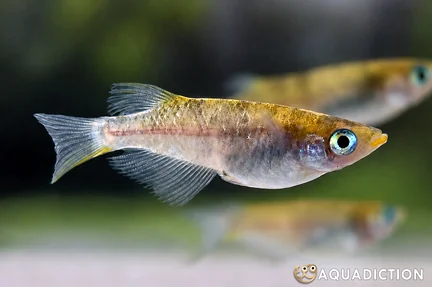
The Javanese Ricefish (Oryzias javanicus), known for its robust and adaptable nature, serves as an excellent choice for various aquarium setups, including community nano tanks, planted environments, and even brackish aquariums. This schooling species can serve as a captivating centrepiece in peaceful community aquariums and particularly excels in planted tank settings. In terms of their colouration, these Ricefish exhibit predominantly "Clear" to pearl white bodies adorned with striking green and yellow accents, complemented by mesmerizing blue eyes.
Maintaining Javanese Ricefish in groups of six or more is essential, as this facilitates the manifestation of their natural behaviours and vibrant colouration. Additionally, they tend to exhibit minimal interaction with other species when kept in substantial schools.
Javanese Ricefish are compatible with other small, peaceable fish species, including Micro Rasboras and Blue-eye Rainbowfish of similar size. They can also coexist harmoniously with larger, tranquil invertebrates. However, when housing them alongside Dwarf Shrimp, it is advisable to provide ample plant cover. To prevent potential hybridization, it is recommended to avoid housing them with other Oryzias species, particularly if breeding is the goal.
Although Javanese Ricefish are highly adaptable and hardy, they thrive in well-maintained, clean water conditions. To showcase their optimal colouration and health, a planted aquarium with a dark substrate, especially featuring floating plants, is ideal. It's important to note that these fish do not fare well in acidic water. Given the right environment with ample hiding spots, they display a notably outgoing nature.
Availability
The Javanese Ricefish isn't avilable any of our marketplace shops, want to be the first to offer it?.
Photos


Sexual Dimorphism
Discerning the gender of Javanese Ricefish involves the recognition of clear visual cues. Mature males, distinct in their appearance, boast a larger size, showcasing vibrant yellow submarginal bands in both caudal-fin lobes. Furthermore, they display elongated and filamentous rays in both dorsal and anal fins, contributing to their overall slender physique. These gender-specific characteristics set them apart from their female counterparts.
Quick Facts
| Scientific Name | Oryzias javanicus |
|---|---|
| Year Described | 1854 |
| Other Names | Javan Ricefish |
| Kingdom | Animalia |
| Classification | Actinopterygii |
| Order | Beloniformes |
| Family | Adrianichthyidae |
| Genus | Oryzias |
| Origins | Thailand Malaysia Singapore Indonesia |
| Approx Max Size | 4 cm |
| Temperament | Peaceful |
| Aquarium Level | Middle - Top |
| Difficulty | Beginner - Intermediate |
| Shoaling | Yes |
| Best kept as | Groups 6+ |
| Diet & Feeding | Omnivore |
| Reproduction | Egg Depositor |
| Average Lifespan | Up to 5 Years |
Water Parameters
| Water Type | Freshwater/Brackish |
|---|---|
| pH | 7.0 - 9.0 |
| GH | 10 - 20 |
| TDS | 90 - 447 |
| ℉ | 72 - 79 |
|---|---|
| ℃ | 22 - 26 |
Natural Habitat
Javanese Ricefish are indigenous to the Mekong and Panimbang River regions across Peninsular Thailand, Malaysia, Singapore, and Indonesia within Southeast Asia. These fish inhabit a variety of aquatic environments, including both brackish and freshwater habitats. They can be observed in a range of aquatic settings, including ponds, ditches, mangroves, swamps, streams, and canals, particularly where dense aquatic plant growth prevails.
Breeding
Breeding Javanese Ricefish is a straightforward process characterized by distinct reproductive behaviours. Female ricefish carry their eggs externally, forming a cluster attached to the genital pore by delicate filaments. Males play a pivotal role in fertilizing these eggs. Subsequently, the female swims past fine-leaved plants or specially designed spawning mops, gently dislodging the fertilized eggs.
At this point, aquarists have the option to either remove the parental fish from the aquarium or transfer the egg-laden plants or mops to a separate growing-on tank. The hatching period for these eggs spans approximately two weeks, following which the fry should be provided with a diet consisting of infusoria and microworms to support their early development.
Diet & Feeding
In their natural habitat of freshwater environments, Javanese Ricefish exhibit a versatile diet that includes both plant matter and small aquatic organisms. They are known to feed on algae, aquatic invertebrates, and small crustaceans found in their surroundings. In an aquarium setting, providing a balanced diet is essential to maintain the health and well-being of Javanese Ricefish.
High-quality commercial fish flakes and pellets serve as suitable staples, supplemented with live or frozen foods such as brine shrimp, Daphnia, and bloodworms to ensure they receive essential nutrients. Offering a diverse range of food sources is key to promoting their overall vitality and ensuring their dietary requirements are met.
Other Ricefish




Published: 18 Jan 2024
Last Updated: 09 Jun 2025