


Starlight Bristlenose Plecostomus - Ancistrus dolichopterus Fish Profile & Care Guide
Introduction
The Starlight Bristlenose Plecostomus (Ancistrus dolichopterus) is a distinctive species of freshwater fish native to the river basins of South America. Renowned for its unique appearance, flat body, and face adorned with tentacle-like bristles, this species is popular among aquarium enthusiasts. Starlight Bristlenose Plecos are relatively small compared to other plecostomus species, making them suitable for smaller aquarium setups.
Their ability to thrive in various water conditions and their utility in controlling algae make them an invaluable addition to community tanks. The fish's primarily nocturnal lifestyle and herbivorous diet, consisting mainly of algae and plant material, underscore its role as an effective tank cleaner. Ancistrus dolichopterus not only contributes to the aesthetic value of an aquarium but also plays a critical role in maintaining the ecosystem within.
The Starlight Bristlenose Pleco, characterised by its serene yet occasionally territorial demeanour, requires sufficient space to mitigate aggression towards conspecifics. While it is feasible to house these Plecos in modest groups, ample space and abundant hiding spots are crucial to fostering a harmonious environment. They cohabit well with other Loricariids and small to medium-sized peaceful fish that thrive in warm, fast-flowing waters.
An ideal habitat for the Starlight Bristlenose Pleco consists of a well-established aquarium enriched with a plethora of shady retreats. These can be creatively fashioned from tangled bogwood, rocky caves, PVC pipes, and robust aquatic plants. The substrate should be composed of small rounded gravel or sand to imitate their natural environment. The filtration system must be robust, promoting brisk water movement while simultaneously providing calmer niches where the fish can rest. High oxygenation levels are essential, and regular, small-scale water changes are advisable to maintain low nitrate levels and ensure optimal water quality.
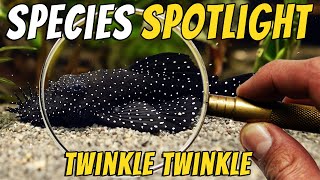
Visually, the Starlight Bristlenose Pleco is stunning. Its dark body is speckled with small white spots and distinguished by a broad white seam on its dorsal and caudal fins. Although this white seam may fade as the fish ages (it has on ours), it remains a striking feature. Notably, the lower lobe of the caudal fin is elongated compared to the upper, enhancing its distinct profile. This species remains a captivating choice for aquarists seeking both aesthetic appeal and functional benefits in their aquatic setups.
Availability
The Starlight Bristlenose Plecostomus isn't avilable any of our marketplace shops, want to be the first to offer it?.
Photos


Sexual Dimorphism
Distinguishing between male and female Starlight Bristlenose Plecos is straightforward, particularly in adults. Males are characterised by prominently developed odontodes on their pectoral fins, opercles, and distinct tentacles on their heads. In contrast, females lack these features, presenting a smoother, less adorned appearance, differentiating them from their male counterparts.
Quick Facts
| Scientific Name | Ancistrus dolichopterus |
|---|---|
| Year Described | 1854 |
| Other Names | L183, Starlight Bristlenose Catfish, Bushymouth Catfish |
| Kingdom | Animalia |
| Classification | Actinopterygii |
| Order | Siluriformes |
| Family | Loricariidae |
| Genus | Ancistrus |
| Origins | Brazil Guyana |
| Approx Max Size | 12 cm |
| Temperament | Peaceful |
| Aquarium Level | Bottom |
| Difficulty | Beginner - Intermediate |
| Shoaling | NA |
| Best kept as | Groups 5+ |
| Diet & Feeding | Omnivore |
| Reproduction | Cave Spawner |
| Average Lifespan | Up to 8 Years |
Water Parameters
| Water Type | Freshwater |
|---|---|
| pH | 5.0 - 7.5 |
| GH | 2 - 12 |
| TDS | 18- 179 |
| ℉ | 73 - 81 |
|---|---|
| ℃ | 23 - 27 |
Natural Habitat
Starlight Bristlenose Plecos are indigenous to the regions of Brazil and Guyana, inhabiting a variety of water systems within the Amazon Basin. Their distribution includes the lower and middle stretches of the Amazon itself, as well as the river basins of the Rio Negro, the lower Trombetas, the Tefé, the Madeira, and the Tapajós Rivers. These fish are typically found in moderate to fast-flowing streams and tributaries characterised by acidic black water. This specific environmental setting is crucial for their survival, offering the unique conditions that support their ecological needs and behaviours.
Breeding
Starlight Bristlenose Plecos engage in a reproductive process known as secretive cave spawning, which has been successfully observed and managed in home aquarium settings. During reproduction, a clutch of vividly gold-coloured eggs is deposited and fertilised within the confines of a secluded cave or crevice. Post-fertilisation, the male assumes a critical role, vigilantly guarding the eggs. He enhances their survival by ensuring a continuous flow of oxygen across them, achieved by the constant fanning motion of his pectoral fins.
The incubation period lasts approximately 4 to 7 days, after which the eggs hatch into larvae, commonly referred to as wrigglers. These larvae initially adhere to the aquarium decor and tank walls. Over the following ten days, they gradually absorb their yolk sacs and transition into a free-swimming stage. Under optimal conditions and with a compatible pair, spawning can occur as frequently as every six weeks, demonstrating the species' robust reproductive capabilities in a controlled environment.
Diet & Feeding
The Starlight Bristlenose Pleco's diet is predominantly herbivorous, necessitating algae as a fundamental component of their nutritional intake. However, it is crucial to supplement this with various other foods to ensure a balanced diet. Algae wafers and tablets serve as excellent staples, enriched occasionally with fresh vegetable offerings such as cucumber, lettuce, or peeled, steamed peas. While these fish will also consume meatier sinking and frozen foods, it is essential to maintain a primarily vegetable-based diet to support their health. Additionally, incorporating bogwood in the aquarium is advisable, as these plecos will graze on it, providing them with vital nutrients found in their natural habitat. This dietary diversity is essential for their overall well-being and longevity.
Videos
Other Plecostomus


Published: 19 Jun 2024
Last Updated: 19 Jun 2024